Scientists Found a New Way to Train the Brain Against Social Media Addiction
Have you ever picked up your phone to check one notification, only to realise that you've spent the next 30 minutes scrolling through social media?
For many people, this has become a familiar experience. You open Instagram, TikTok or Facebook with a specific purpose, but before you know it, you're watching videos and checking updates you never intended to see.
The problem isn't always how much time we spend online. Sometimes, it's how difficult it becomes to direct our attention elsewhere.
Now, researchers are exploring a different approach. A 2026 study published in Frontiers in Psychology investigated whether training people to pay less attention to social media-related cues could help reduce problematic social media use.
The findings suggest that changing certain attention habits may offer another way to manage compulsive scrolling.
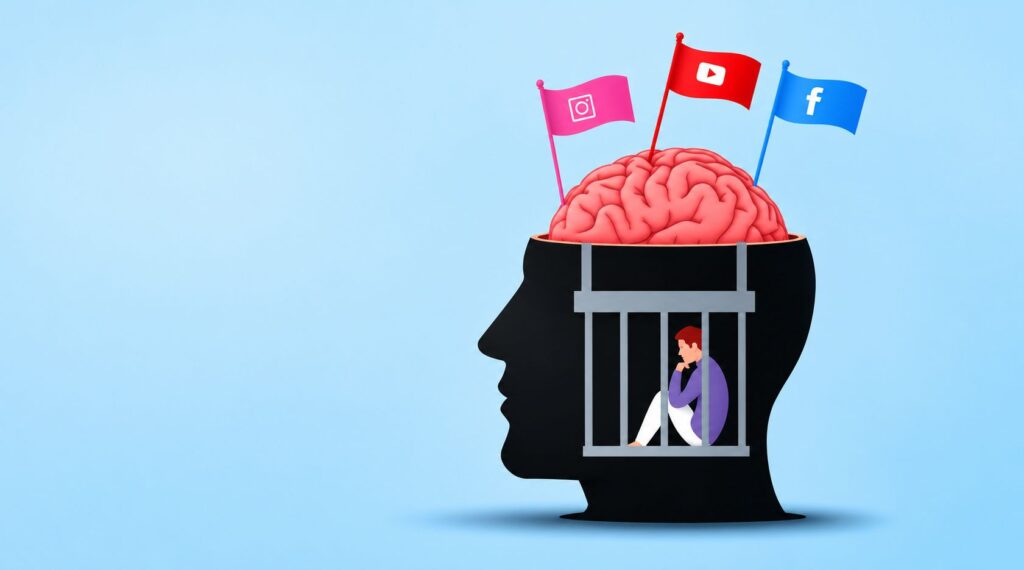
Why Social Media Is So Difficult to Resist
Have you noticed how simply seeing a social media notification can make you want to check your phone, even when you're busy?
Our attention can become sensitive to things we frequently interact with. For regular social media users, familiar app icons, notifications and other online cues can quickly attract attention.
Researchers call this attentional bias. It happens when certain information captures our attention more easily than other things around us.
For example, someone who frequently uses Instagram might notice its notification icon immediately, even while concentrating on an assignment.
Over time, this tendency may contribute to repeated checking. However, getting distracted by an app doesn't automatically mean someone has a social media addiction.
The concern becomes greater when social media use is difficult to control and begins interfering with sleep, studies, work or daily responsibilities.
What Scientists Discovered About Training Attention
What if reducing excessive social media use involves more than simply spending less time on your phone?
That's what researchers explored in a study published on March 20, 2026, in Frontiers in Psychology.
The research involved 44 college students who showed tendencies towards problematic social media use.
Researchers investigated whether a technique called attentional bias modification (ABM) could help participants become less distracted by social media-related information.
The idea is to train people to redirect their attention away from cues that automatically attract them.
Participants were divided into two groups. One received attention-training exercises, while the other completed a comparison task.
The researchers then examined whether the training changed participants' responses to social media cues and reduced their problematic-use scores.
How the New Brain-Training Technique Works
Although attentional bias modification sounds complicated, the idea behind it is simple: practising how to direct attention away from distracting information.
The researchers used a computer-based exercise known as the visual dot-probe task.
Participants saw pairs of words on a screen. One word was related to social media, while the other was neutral.
After the words disappeared, a small dot appeared, and participants had to identify its location as quickly as possible.
For the training group, the dot consistently appeared where the neutral word had been displayed. This encouraged participants to direct their attention away from social media-related information.
The comparison group completed a similar exercise, but the dot could appear in either position.
Each training session lasted approximately 15 minutes, and participants completed one session daily for seven consecutive days.
The technique wasn't designed to stop people from accessing social media. Instead, it tested whether repeated practice could change how strongly social media-related cues attracted their attention.
What Happened After Seven Days of Training?
After seven days, the researchers observed encouraging changes.
Participants who received attention training showed reduced attentional bias towards social media-related information. Their scores on a measure of problematic social media use also decreased.
The comparison group did not show the same significant improvements.
But did the effects last?
The researchers assessed participants again two weeks and four weeks after training ended.
The improvements remained detectable at both follow-up assessments, suggesting that the effects extended beyond the training period.
However, this doesn't mean seven days of training can cure social media addiction. The results show a promising change in measured attention patterns and symptom scores, not proof of a permanent solution.
Why the Findings Matter for Social Media Users
For anyone who struggles to complete an assignment or finish a task without repeatedly checking social media, these findings offer an interesting possibility.
They suggest that managing excessive social media use may involve more than limiting screen time. Learning to control what captures our attention could also matter.
Think about a student trying to study while their phone is nearby. Even without opening an app, the urge to check for updates can interrupt concentration. This also highlights how our habits and patterns of focus can influence our actions, something we've explored further in our article on the power of the mind.
If attention-training techniques can reduce people's responses to these distractions, they may eventually provide another way to support healthier digital habits.
Unlike deleting apps or setting screen-time limits, this approach focuses on changing how people respond to social media-related cues.
It's still an emerging area of research, but it raises an important question about whether attention itself can be trained to resist digital distractions.
What the Study Does Not Prove Yet
Although the results are encouraging, several questions remain unanswered.
First, the study involved only 44 college students. That's a relatively small group, so the findings cannot automatically be applied to teenagers, older adults or everyone struggling with excessive social media use.
The follow-up period was also limited. While improvements remained detectable four weeks after training, researchers have not established whether the benefits would last for several months or years.
The study also measured changes in attentional bias and problematic-use scores. It did not demonstrate that participants had permanently overcome social media addiction.
Larger studies with longer follow-up periods are needed before attention training can be considered an established treatment.
For now, the technique is best understood as a promising approach that requires further investigation.
Practical Ways to Reduce Social Media Distractions
While scientists continue exploring attention-training techniques, there are everyday steps you can take to become more intentional about your social media habits.
1. Turn off unnecessary notifications
Not every notification needs your immediate attention. Consider disabling alerts from apps that frequently interrupt your studies, work or other activities.
2. Set specific times for checking social media
Instead of opening social media whenever you feel bored, choose particular times to check messages, watch videos or catch up on updates.
3. Move distracting apps away from your home screen
Keeping social media apps on your home screen makes them easy to open without much thought. Moving them into a folder may help reduce automatic checking.
4. Practise focusing on one task at a time
Whether you're studying, working or reading, try completing an activity without constantly switching to social media. Start with short periods of uninterrupted focus and gradually increase them.
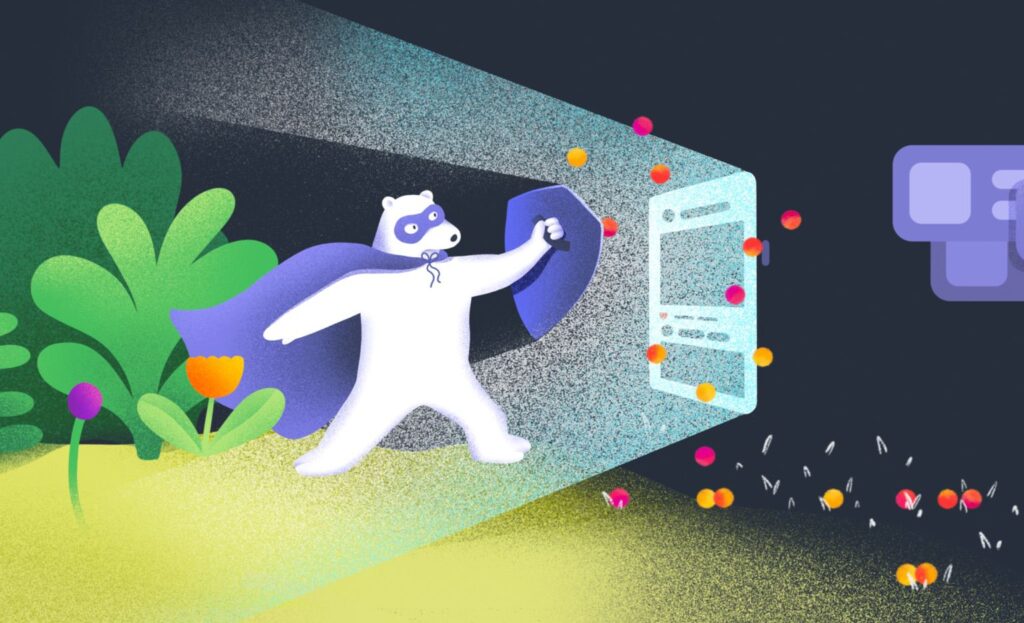
Bonus: Try the one sec App to Reduce Mindless Scrolling
What if you could reduce social media distractions without completely giving up the apps you still need?
That's where one sec comes in.
one sec is an app designed to help you become more intentional about how you use your phone. Instead of relying entirely on willpower, it provides different tools to help you manage distracting apps and websites.
And it does much more than simply asking you to pause before opening social media.
Here are some of its useful features:
- Block distracting apps and websites: You can block selected apps whenever you need to concentrate or schedule blocks for specific days and times. There's also a Strict Mode that makes it harder to disable an active block before the scheduled time ends.
- Set limits for individual sessions: Instead of blocking an app completely, one sec can ask how long you intend to use it. Once you reach that limit, it interrupts your session and encourages you to reconsider whether you want to continue.
- Block distracting features inside apps: This is particularly useful if you need social media for other purposes. On Android, one sec can block distractions such as YouTube Shorts and Instagram Reels while allowing you to continue using other parts of those apps. It also supports blocking certain distracting sections of other supported apps.
- Interrupt automatic app opening: Whenever you try opening a selected distracting app, one sec can introduce a short breathing exercise or another supported intervention before allowing you to continue. This gives you a moment to reconsider whether opening the app is necessary.
- Reduce distractions on your computer: one sec also offers browser extensions that can help you manage distracting websites while studying or working.
Personally, one feature I particularly liked when reviewing the app was the ability to block distractions within an app without blocking the entire app.
For example, if you use YouTube to watch educational videos but frequently get distracted by Shorts, you don't necessarily have to stop using YouTube. You can simply restrict the distracting feature while keeping access to the content you actually need.
That's what makes one sec worth considering. It gives you different ways to manage distractions depending on your habits and what you're trying to achieve.
Of course, one sec isn't the same as the attention-training technique examined in the study. It focuses on interrupting habitual phone use and creating practical boundaries rather than using the visual attention-training exercises researchers tested.
We've explored its features in more detail in our one sec review, including how the different blocking and intervention tools work and what you should know before trying the app.
one sec offers a free version, although some advanced features require Pro. If you'd like to explore more of its features, you can use our link to get one month of free access.
Try one sec free for one month here.
Affiliate disclosure: This article contains an affiliate link. We may earn a commission if you make a qualifying purchase through it, at no additional cost to you.
Conclusion
Social media has become part of everyday life, but that doesn't mean we have to respond to every notification or spend more time scrolling than we intended.
The new research suggests that learning to redirect our attention away from social media-related distractions may help people develop better control over their digital habits.
Although the findings are promising, more studies are needed to understand how effective the technique could be in the long term.
For now, simple changes such as managing notifications, setting boundaries and using tools that encourage intentional phone use may help.
Perhaps the question is no longer just how much time we spend on social media, but how much control we have over the attention we give it.
Suggested Post: Your Phone Notifications May Disrupt Your Focus for About 7 Seconds, Study Finds.