Themelock: Why You May Regret It + Free Alternatives
It’s tempting to grab nulled software instead of paying on the developer’s site.
If you’re being honest with yourself, you’ve probably considered it at some point.
Sure, it can feel like a bargain—but it can also turn into a nightmare.
These days, almost every app on the web has a nulled clone. “Nulling” ignores the original license terms. It’s applied to software under free/open licenses and to proprietary licenses that forbid modification or redistribution.
As I’ve said, nulling may look like a steal, yet it can wreck years of work and even land you in legal trouble especially when you’re dealing with illegally nulled items.
For site owners, using nulled themes and plugins can bring your website down completely.
In this Themelock review, we’ll examine what the site offers, whether it’s safe, and where it stands legally. We’ll also note alternatives from official sources and similar providers. Let’s dive in.
About Themelock.com
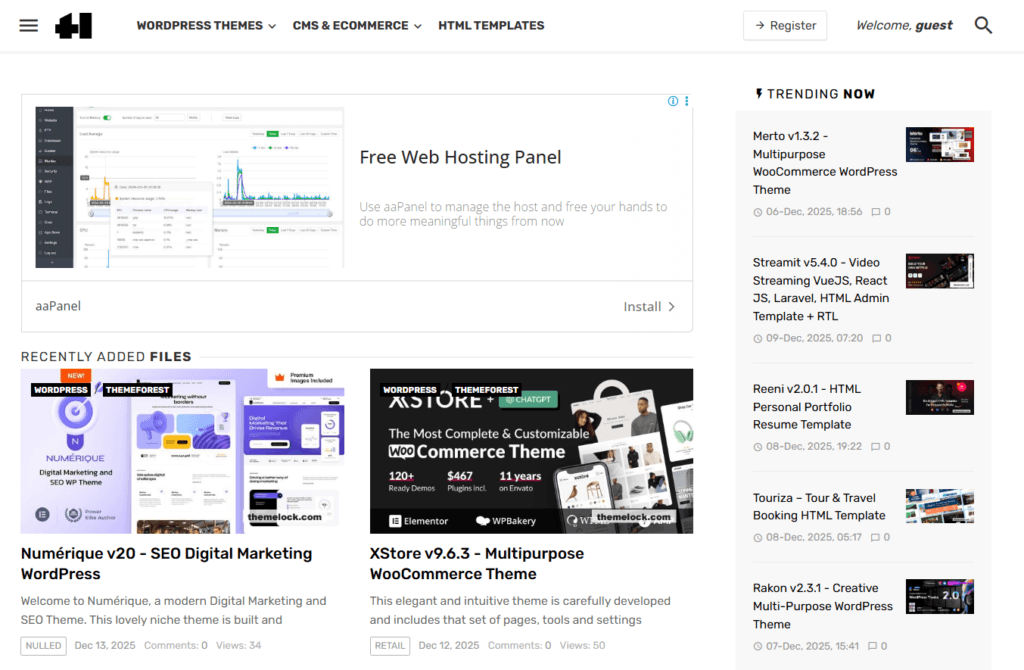
Themelock.com is a website that offers a collection of premium themes and templates for download, mainly targeting WordPress users and people building websites. The site lists resources across categories like WordPress items, CMS/ecommerce templates, and HTML templates, and it claims its files are released under the GPL and can be used freely on multiple sites.
This website is similar to Codelist.cc, themeslide, and Weadown which we don’t recommend.
>>> Quickly see what we recommend even GPL distributors if you still want something free/cheap.
Offerings on Themelock.com
Content on Themelock.com is organized into several categories:
- WordPress Themes (and some plugins): Mainly WordPress themes, and it also posts some WordPress plugins inside the WordPress section.
- CMS & ECOMMERCE: Templates and add-ons for different CMS and ecommerce platforms (with sub-categories like Magento, OpenCart, PrestaShop, Shopify, ZenCart, Joomla, Drupal, phpBB).
- HTML Templates: General HTML templates, including mobile/PWA-style HTML templates.
- Other Templates: A mixed category for templates across different stacks (it lists items like Laravel, React, Vue/Nuxt, Django, NodeJs, and also some design/email template resources).
So, instead of “PHP Scripts” and “Mobile Apps” as separate main categories, Themelock mostly presents those as PHP-based templates/admin dashboards and mobile-focused HTML/PWA templates within its templates sections.
Understanding WordPress License
The WordPress licensing topic is sensitive. The word AWARENESS—like the apple eaten by Adam—can bring knowledge with a hint of trouble. Think of the GPL in that light: powerful and protective, yet often misunderstood by WordPress users.
The GPL (General Public License) is one of the most widely used free software licenses. Its copyright protections are strong: no one can take an open-source project and claim exclusive ownership, and no one can block others from using it. That aligns perfectly with WordPress’s open-source mission.

The GPL guarantees four core freedoms:
- The freedom to use and study the software.
- The freedom to modify the software.
- The freedom to distribute copies of the software.
- The freedom to distribute modified copies to help the community.
These are more than license terms—they’re community principles that enable sharing, learning, and improvement.
The GPL and Users
For users, the GPL grants broad freedom: use, study, and modify as you see fit. That transparency helps people understand how things work—and improve them.
The right to share is the capstone—users can distribute programs, including WordPress derivatives, to help others.
Because of this, themes and plugins can become free “as in beer,” not just free “as in speech.”
“Free as in beer” happens when someone shares a premium product they purchased. With modification freedom, a user might remove the license key prompt (often used to require payment) and still use the software.
Note: “free as in beer” refers to price; “free as in speech” refers to the freedoms above.
The GPL and Developers
For developers, the GPL is both empowering and limiting.
On the plus side, you can build on existing work. With so much under the GPL—WordPress core, numerous plugins/themes—you can fork, remix, and extend without starting from scratch. You can sell your improvements, too. Contributing back also boosts visibility.
On the downside, you can’t stop others from sharing or modifying your GPL-licensed work. Once released, anyone can redistribute it—sometimes free. Your premium plugin could appear on a “GPL club” site the next day.
As a result, the real product is your support—updates, help, and reliable distribution. The code is open; the service is what people pay for.
In short: the GPL empowers both users and developers, but it doesn’t let creators strictly control downstream sharing.
Learn more about WordPress licensing.
Is Themelock Legal and Legit?
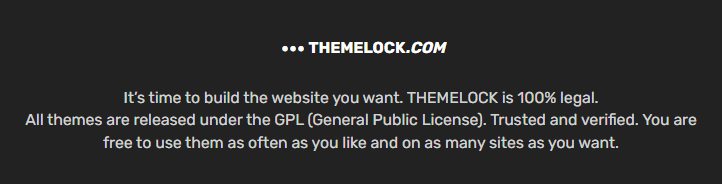
Themelock.com presents itself as a GPL-based download site. On its pages, it says it is “100% legal” and that “all themes are released under the GPL (General Public License),” meaning you can use them on as many sites as you want.
But in practice, ThemeLock can be both legal and illegal, depending on what you download and the license attached to that exact item. Even in the WordPress space, things can get tricky because WordPress allows split licensing. That means the PHP code can be GPL, while other parts of the package (images, design files, some JavaScript/CSS, etc.) may have different terms. If a download includes non-GPL components and you take or share them without permission, that can cross into infringement.
Also, ThemeLock lists many non-WordPress templates and assets, and those are not automatically “covered” just because GPL is mentioned on the site. So the safest approach is always to verify the license of each file before using it commercially.
ThemeLock’s own disclaimer also says it does not host the files, that content is indexed from other sites, and it warns users not to download materials when they do not have the legal rights to do so. It also has a DMCA policy for takedown requests.
Is Themelock Safe to Use?
ThemeLock is not something I would call safe by default.
Even though the site claims it is “trusted and verified,” its own disclaimer says the files are not hosted on their server, the links are indexed from other sites on the internet, and the site owner cannot be held responsible for what users are posting.
That combination is a red flag. It means you are often downloading items that come from somewhere else, and there is no clear, public proof that every file is properly tested and cleaned before it is shared. So if you’re thinking of downloading anything from ThemeLock, think twice. It can easily put your site at risk.
Why You May Not Want to Use Themelock
Here are key reasons you might regret it.
High Chance of Installing Malware
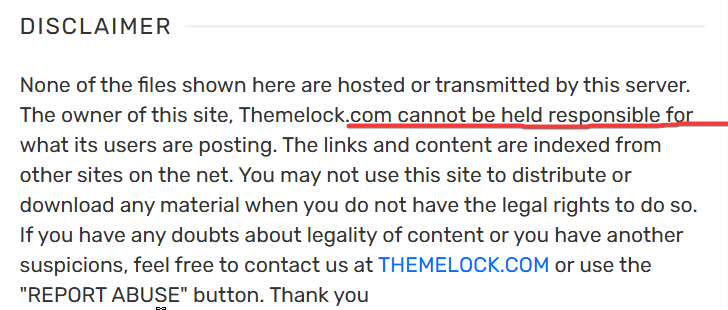
Themelock explicitly says “download at your own risk.” That’s more than boilerplate, it’s a warning.
They don’t scan, test, or verify safety. Many files come from untrusted sources and could contain malware or backdoors.
Once installed, these can hijack your site, steal data, or crash your server. If you care about your site’s integrity, steer clear.
You’re Hurting Your SEO Without Knowing It
Nulled themes or plugins from Themelock can silently damage your SEO.
Such files often hide toxic links, spammy redirects, or malicious code that search engines detect and penalize.
You may not see obvious problems while your rankings fall—or your site gets blacklisted. Recovery can take months.
You Hurt Developers by Doing That
Every cracked download deprives creators of income. Developers rely on sales to maintain products, provide support, and innovate.
Using nulled versions undermines their work and the sustainability of the WordPress ecosystem. Supporting developers keeps the tools you rely on updated and available.
You’re Undermining the WordPress Experience
WordPress runs on community, trust, and collaboration.
Unauthorized/nulled products erode that foundation—introducing security holes, no support, and poor user experiences.
Over time, that degrades the quality and reliability of WordPress itself. If you care about the platform’s future, stick to official sources.
Themelock Alternatives: What to use instead?
Instead of risking your security, here are safer Themelock alternatives to use for peace of mind. No threat, no malware. Use legitly!
Free items from WordPress.org
The WordPress.org directory is made up of over 13,000 free themes and 60,000 free plugins that you can install and use without spending a dime.
While this may not be what you need, at least there is a long list of amazing items to use. If you can’t afford it, then don’t use it, they say.
Legit third party sources like ThemeForest and Codecanyon
If you’re looking for amazing deals, ThemeForest acts as a great place for your theme needs while Codecanyon bases on plugins.
Occasionally, they run promotions that can reduce the prices of themes and plugins to a great extent.
Appsumo Lifetime Deals
If you haven’t gotten a lifetime plan of software before, you’re really missing out.
Lifetime deal gives joy if you trust what you’re buying — You only have to pay once, and then use it forever.
No subscription renewal. No headache.
Appsumo is the best place for lifetime deals. Their offers range from WordPress Plugins and tools to online tools.
Reputable GPL theme and plugin sites
If the already discussed alternatives didn’t meet your need, then another option is to use paid and reputable GPL websites.
These are platforms that focus on GPL-licensed themes and plugins and sell them for a fee with a virus-free guarantee.
Using free sites like Weadown is very risky. No wonder the general quote — If something is Free, then you become the Product.
Paid sites like Pluginsforwp, Srmehranclub, and GPL Vault do it as a neat business. They charge a fee in exchange for safety and security. They are mostly safe to use.
Conclusion
Themelock is one of the cheap places you can go to for free download of nulled themes and templates. But it’s not safe to use.
You can’t stand the consequences of patronizing nulled websites. You’re trading your security, SEO performance, and your reputation for “free” files.
When you rely on nulled themes, the beauty of WordPress suffers. And when it gets out of control, it affects everyone, site owners, developers, and the whole ecosystem.
That said, it’s advisable to always use legit sources like Appsumo Lifetime Deals as an alternative. Or go back to the developer’s site.
FAQs
Should I get themes from ThemeLock?
No, don’t download any theme from ThemeLock. It can destroy your hard work in one minute.
Even if a theme claims GPL, nulled packages can still come with hidden files, backdoors, spam links, or broken code. It’s not worth the risk.
Should I get templates from ThemeLock?
No, I won’t advise it. Templates are also commonly abused in piracy spaces, and you can’t verify what was added inside the files before you download.
If you need a template, use official marketplaces, the developer’s website, or clean open-source options you can actually trust.
Should I get Divi from ThemeLock?
It’s not advisable. I strongly recommend buying Divi directly from the original developer.
Themelock downloads can expose your website to serious security risks, malware, hacking, or hidden scripts. If you want peace of mind, go legit.
If you’re looking for cheaper options, consider official discounts, bundles, or lifetime deals on reputable platforms like AppSumo.
Can I download Avada from ThemeLock?
Downloading Avada from ThemeLock isn’t safe. To protect your site, always get it from the official source.
Nulled theme files may contain security vulnerabilities or malicious code that can compromise your site and your visitors.
If your budget is tight, use free themes, starter templates from trusted providers, or wait for legit promotions.
Is it safe to get Astra Pro from ThemeLock?
No, it’s not safe. Astra Pro is a premium product, and nulled copies can come with malware injections, hidden scripts, and security holes.
It’s safer and smarter to get Astra Pro from the original developer, or use the free version and upgrade later when you’re ready.
How does the GPL license affect WordPress?
The GPL license shapes WordPress into what it is, an open-source tool that anyone can use, change, and share. It makes sure no single person or company can lock it down.