What Are Internal and External Links?
Many websites publish dozens or even hundreds of pages but still struggle to rank in search results. Often the problem is not the content itself. The issue is how the pages connect to each other and to the rest of the web.
Links create those connections. Some links move users through pages on the same website, while others send them to different websites entirely. Understanding the difference helps you structure content properly and improve how search engines discover your pages.
This guide explains what internal and external links are, how they work, and why they matter for SEO.
What Are Internal Links?
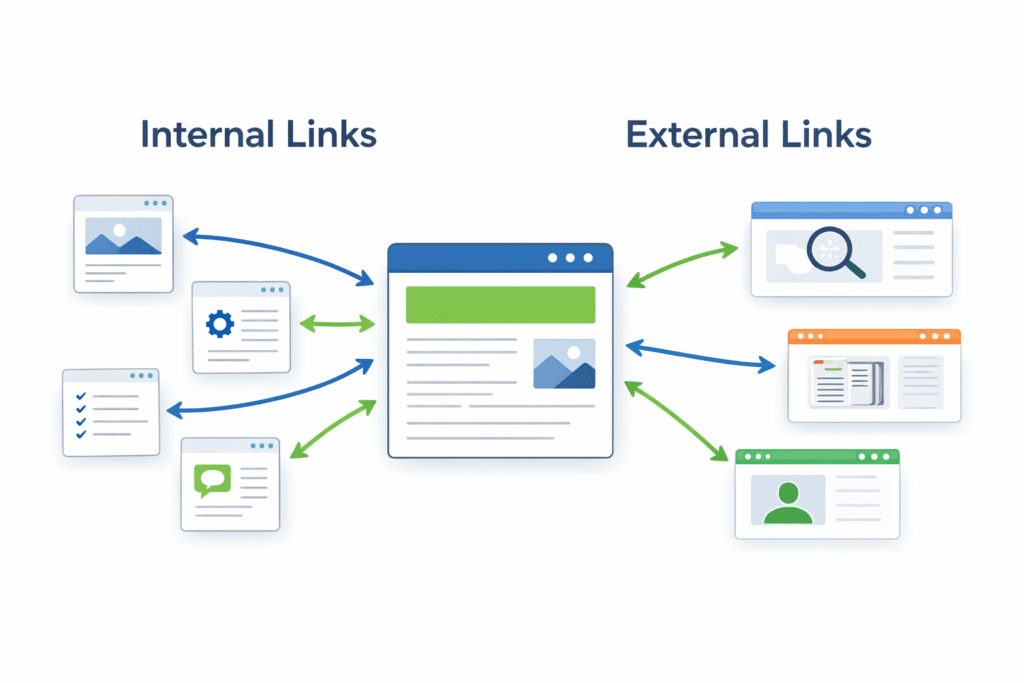
Internal links are hyperlinks that connect one page on your website to another page on the same domain.
For example, if a blog post links to another article on the same site, that is an internal link. These links help both users and search engines navigate your content.
Here’s how it works. When a page contains internal links, search engines can follow those links to discover other pages on the site. This allows them to crawl more content and understand how topics relate to each other.
Internal links matter because they:
- help search engines discover pages
- distribute authority across the site
- guide users to related content
On larger websites, managing these links manually becomes difficult. Many publishers use internal linking tools to identify linking opportunities and maintain a strong site structure.
What Are External Links?
External links point from your website to a page on a different domain.
For example, linking to a research article, a tool website, or an industry resource creates an external link.
These links serve a different purpose from internal links. Instead of connecting your own content, they connect your site to the wider web.
External links matter because they:
- provide supporting references
- add credibility to your content
- help users find additional resources
Search engines also use external links to understand how pages relate to trusted sources across the web.
Internal Links vs External Links
Although both are hyperlinks, they serve different roles in SEO and site navigation.
| Feature | Internal Links | External Links |
|---|---|---|
| Destination | Another page on the same site | A page on a different website |
| Control | Fully controlled by your site | Controlled by another website |
| Primary purpose | Connect site content | Reference outside resources |
| SEO impact | Distributes authority across pages | Builds credibility and context |
Internal links strengthen your site structure, while external links connect your content to other authoritative sources.
Both types are important for a healthy website.
How Search Engines Use These Links
Search engines rely heavily on links to understand websites.
When a search engine crawler visits a page, it scans the page for links and follows them to discover new pages. Internal links show the relationship between pages within the same site, helping search engines understand topic clusters and site structure.
External links work differently. They help search engines evaluate how your content relates to the broader web and whether you reference trustworthy sources.
When used properly, both types of links make your content easier to navigate and help search engines understand your site structure.
When to Use Internal and External Links
Each link type has situations where it works best.
Internal links are useful when connecting related content on your website. For example, you might link a beginner guide to a more advanced tutorial on the same topic.
External links work best when citing research, referencing tools, or directing readers to additional information outside your site.
A well-structured article often includes both types. Internal links guide readers through your content, while external links support your claims with reliable sources.
Managing Links Across a Growing Website
As websites grow, keeping track of internal links becomes harder. Pages may receive too few links, while others may be linked excessively.
Internal linking tools can help analyze your site structure and identify opportunities to add new links. Some tools even suggest contextual links based on the content of your pages.
For WordPress sites, plugins designed for internal linking can automate part of this process and help maintain a consistent linking strategy.
Conclusion
Internal and external links both play an important role in how websites function. Internal links connect your content and help search engines understand your site structure, while external links connect your content to the wider web.
Using both types correctly improves site navigation and helps search engines understand how your pages connect. As your site grows, paying attention to how pages link to each other becomes increasingly important.