Backlinks vs Internal Links: What’s the Difference for SEO?
Many site owners hear that links matter for SEO, but the conversation often gets mixed up. Some people mean backlinks. Others mean internal links. Both matter, but they do different jobs.
If you do not separate them clearly, it becomes harder to build the right strategy. You may spend all your time chasing backlinks while your own site structure is still poorly organized. You may also build a strong internal system but ignore the authority that backlinks can bring from outside your site.
This guide explains the difference between backlinks and internal links, how each one helps SEO, and how they work together.
What Are Backlinks?
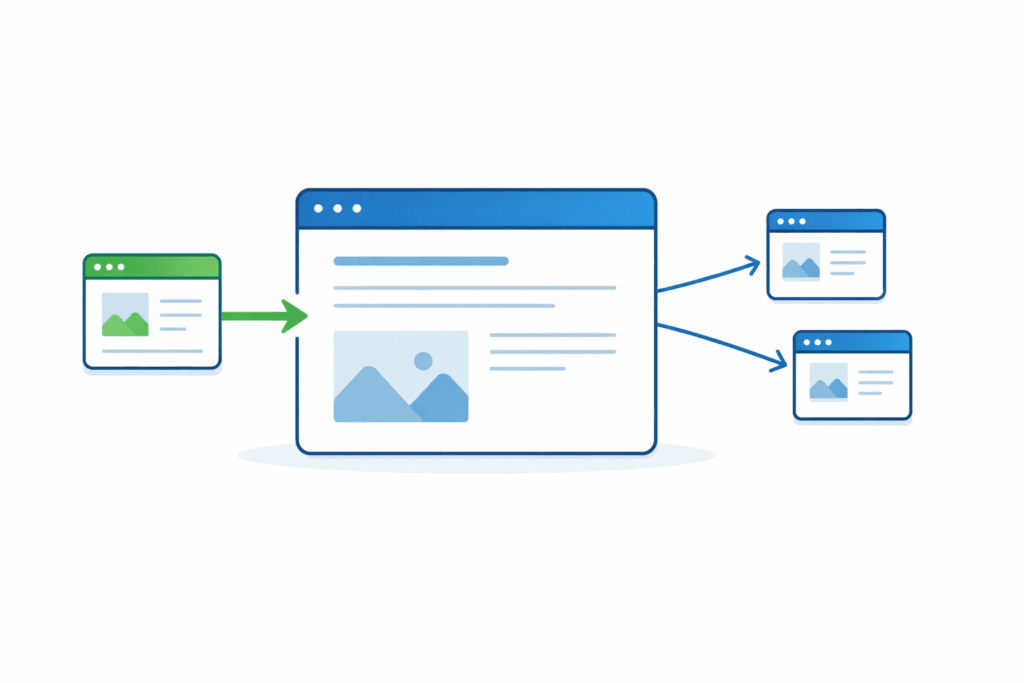
Backlinks are links from another website to your website.
If another site links to one of your pages, that link is a backlink for you. It comes from outside your domain and points readers or search engines back to your content.
This is one reason backlinks are often treated as authority signals. They show that another site found your page worth linking to.
What Are Internal Links?
Internal links connect one page on your site to another page on the same site.
You control these links yourself. They help readers move from one page to the next and help search engines understand how your content is connected.
If you want the deeper explanation, see our guide to internal linking for SEO.
The Main Difference Between Backlinks and Internal Links
The biggest difference is where the link comes from.
A backlink comes from another website. An internal link comes from your own website.
That single difference changes everything else. It affects control, purpose, scale, and SEO impact.
| Factor | Backlinks | Internal Links |
|---|---|---|
| Source | Another website | Your own website |
| Control | Limited | High |
| Main role | Authority and referral value | Structure, discovery, and context |
| SEO use | Helps build trust and ranking power | Helps distribute support across pages |
| Management | Harder to earn | Easier to edit directly |
How Backlinks Help SEO
Backlinks can strengthen a page by sending authority from outside your site. They can also bring referral traffic when people click through from the linking page.
Because backlinks come from other domains, they are usually harder to get. You cannot simply add them whenever you want. You have to earn them, build them, or attract them through content and outreach.
That is why backlinks are often treated as the harder side of SEO. They depend on other sites, not just your own editing decisions.
How Internal Links Help SEO
Internal links help search engines find pages and understand how those pages relate to one another. They also help readers keep moving through your content.
This matters because not every page on your site serves the same role. Some pages need more support than others. Internal links help you direct that support where it matters most.
A clear internal linking strategy helps you do this with purpose instead of linking at random.
Backlinks Bring Authority. Internal Links Distribute It.
This is one of the easiest ways to think about the difference.
Backlinks can help bring authority into your site. Internal links help move that support through the pages you already have.
If one page earns backlinks but has weak internal links, much of that value stays trapped on that page. If your internal links are strong, that page can support related pages more effectively.
Which One Matters More for SEO?
There is no useful answer without context.
Sometimes backlinks are the missing piece, especially on a site with little authority. In other cases, the site already has backlinks, but the internal structure is the real issue.
In practice, both matter. Backlinks often have more impact on raw authority. Internal links matter just as much for structure, crawl paths, and getting your important pages the support they need.
Why You Should Not Treat Them as Competitors
Backlinks and internal links are not competing systems. They work better together.
A strong page with backlinks becomes more valuable when it links naturally to related pages on your site. At the same time, a strong internal structure makes it easier for search engines to understand where that page fits inside the bigger topic.
This is one reason internal linking and link building should not be planned in isolation.
Anchor Text Matters in Both
Both backlinks and internal links rely on anchor text. The difference is control.
With internal links, you choose the wording. With backlinks, other sites often choose it.
That is why internal anchor text gives you more room to improve context across your site. If you want the deeper breakdown, read our guides on anchor text and anchor text optimization.
Common Mistakes When Comparing Backlinks and Internal Links
One mistake is assuming backlinks make internal links less important. They do not.
Another mistake is thinking internal links can replace backlinks completely. They cannot. Internal links can only work with the authority already inside your site.
It is also common to focus on homepage backlinks while ignoring the pages deeper in the site. When the structure is weak, those pages often get less support even if other parts of the site perform well.
When Internal Linking Tools Help
Backlink management and internal linking are different workflows. Internal links become much harder to review once the site grows.
On a larger site, interlink automation tools make it easier to find weak pages, review anchor text, and spot places where important pages need more support. They also help when you need to see how your internal structure is handling the authority already coming into the site.
How to Balance Backlinks and Internal Links
Start by building pages worth supporting. Then make sure your site structure helps those pages.
If a page earns backlinks, look at how it connects to related pages. If a key page has good internal support but no outside authority, it may need stronger promotion or link-building work.
The goal is balance. You want authority coming in from outside the site, and you want a structure that can use it well once it arrives.
Conclusion
Backlinks and internal links both matter for SEO, but they do different work. Backlinks help bring authority into your site. Internal links help connect your pages and direct support where it matters.
If you understand the difference, it becomes much easier to fix weak spots in your SEO strategy. External links are a good next topic to look at.